
Μάθημα : Ανακάλυψη Γνώσης σε Βάσεις Δεδομένων (Knowledge Discovery in Databases)
ISE709 - ΓΕΩΡΓΙΟΣ ΕΥΑΓΓΕΛΙΔΗΣ, ΓΕΩΡΓΙΑ ΚΟΛΩΝΙΑΡΗ (GEORGIOS EVANGELIDIS, GEORGIA KOLONIARI)
Περιγραφή Μαθήματος
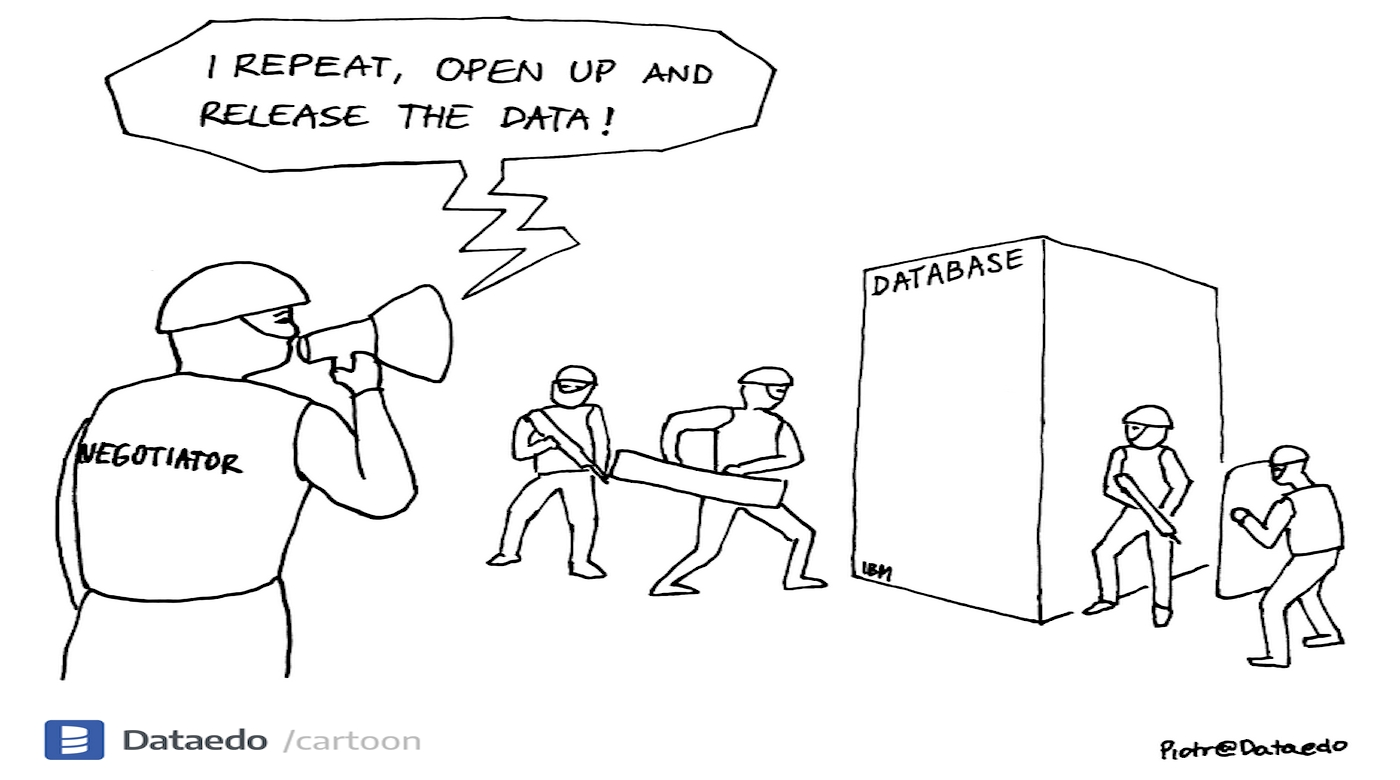
Knowledge Discovery from Databases (KDD):
The process of discovering useful patterns or knowledge from (large) data sources.
Data sources:
- databases
- text
- images
- World Wide Web
- streaming data (video, audio)
- structures (graphs, etc.)
-
Instructors
Georgios Evangelidis (gevan@uom.edu.gr)
Georgia Koloniari (gkoloniari@uom.edu.gr)Course Syllabus
Knowledge Discovery in Databases Concepts
Exploratory Data Analysis and Visualization
Data Reduction
Classification
Clustering
Association Rules
Introduction to Web Mining
Link Analysis
Graph Mining
Web Usage Mining
Recommender Systems
Course Objectives/Goals
Upon completion of the course, the student will be able to:
[a] understand the concept of knowledge discovery from databases;
[b] understand the value of exploratory data analysis and visualization as a preprocessing step;
[c] understand and apply data reduction techniques;
[d] understand and apply knowledge mining techniques from data such as classification, clustering, association rules using common tools (e.g., WEKA, R, Python);
[e] understand and apply knowledge mining techniques on the World Wide Web.Prerequisites/Prior Knowledge
Databases, Programming
Bibliography
- P.-N. Tan, M. Steinbach, A. Karpatne and V. Kumar, Introduction to Data Mining, 2nd Edition, Addison Wesley, 2018.
- J. Leskovec, A. Rajaraman and J.D. Ullman, Mining of Massive Datasets, 3rd Edition, Cambridge University Press, 2020.
- Mohammed J. Zaki, Wagner Meira Jr., Data Mining and Analysis: Fundamental Concepts and Algorithms, Cambridge University Press, 2014.
Assessment Methods
Final Written Examination (50%): Conducted at the end of the semester, comprising problem-solving exercises, multiple-choice questions, and short-answer questions.
Compulsory Group Programming Assignments (50%): Collaborative code development projects. Each group will undergo a mandatory oral examination during office hours regarding their solution.
Exam Eligibility:
Submission of the group programming assignments is a strict prerequisite for participating in the final examination.
Final Grade Calculation:
The final grade (scale 0-10) is determined by combining the final written exam (50%) and the group assignments (50%), provided that the student achieves a passing grade (>= 5) on the final exam.
Instructional Methods
Weekly lectures
Ημερολόγιο
Ανακοινώσεις
Όλες...-
Πέμπτη 19 Νοεμβρίου 2026 - 6:41 μ.μ.
-
Πέμπτη 5 Μαρτίου 2026 - 10:42 π.μ.
-
Πέμπτη 5 Μαρτίου 2026 - 10:41 π.μ.
-
Πέμπτη 22 Ιανουαρίου 2026 - 8:39 μ.μ.
-
Δευτέρα 19 Ιανουαρίου 2026 - 10:46 π.μ.